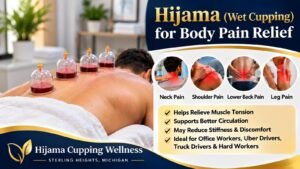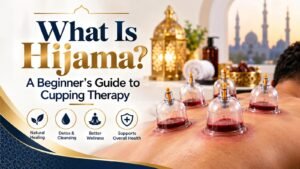
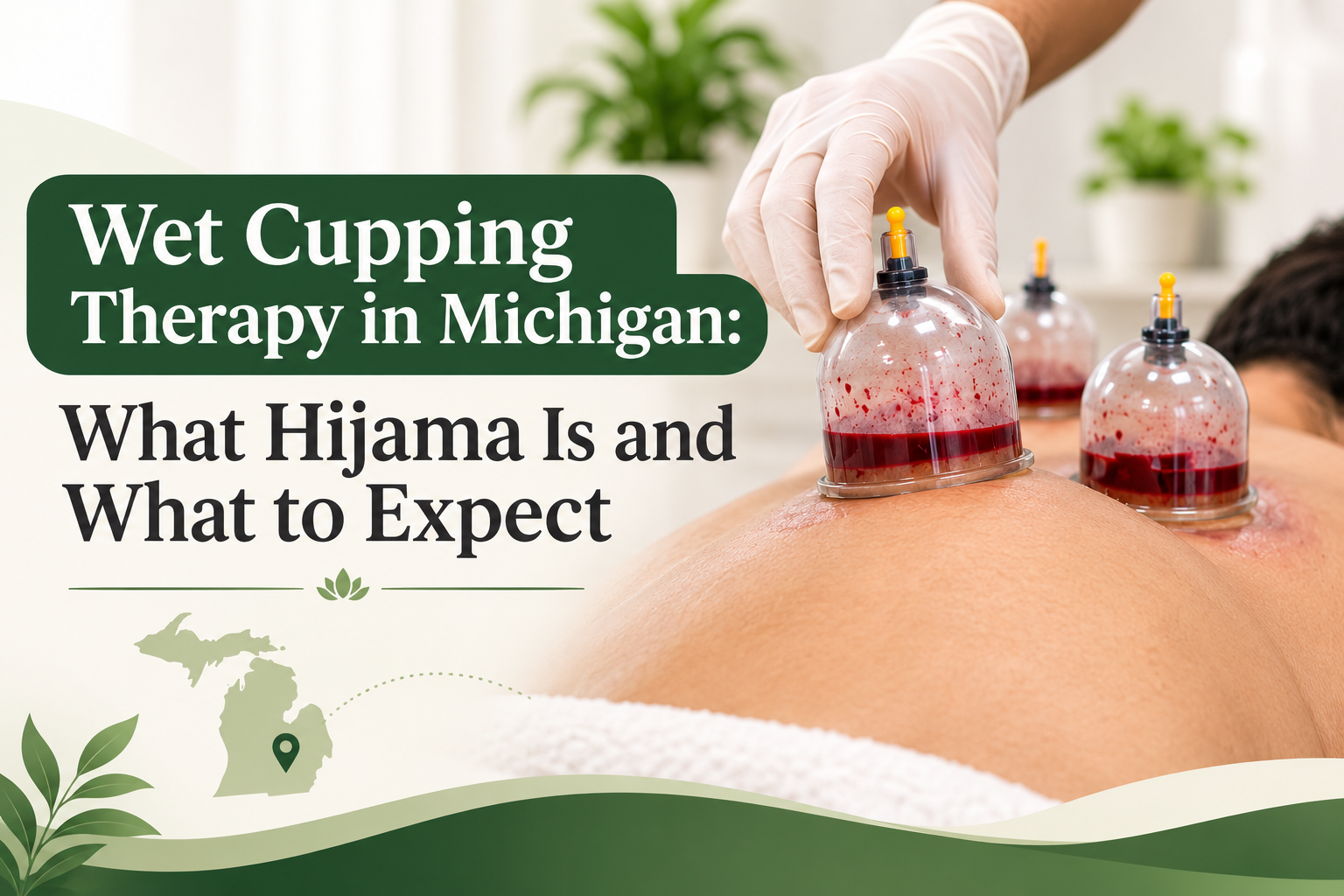
Wet cupping therapy, also called hijama, is a traditional practice where cups create suction on the skin, tiny cuts are made, and a small amount of blood is drawn out. People have used it for centuries, and many seek it today for relaxation and relief from muscle tension. Research on its benefits is limited and mixed, so it is best seen as a complementary practice, not a cure.
If you live in Michigan and are thinking about hijama cupping, this guide explains the basics in plain terms. You will learn how it works, what a session feels like, and how to stay safe.
What Is Wet Cupping Therapy?
Wet cupping is one of two main styles of cupping. In dry cupping, a cup sits on the skin and pulls it upward with suction, with no cuts. In wet cupping, the practitioner first places a cup to lift the skin, removes it, makes very small, shallow cuts, and then places the cup again. The suction draws a small amount of blood to the surface.
“Hijama” is the Arabic word for this practice. You may also see it called Hijama cupping or “prophetic cupping” in some communities.
A Brief History of Hijama
Cupping is very old. Writings from ancient Egypt, Greece, and China describe cup-based treatments. Traditional Chinese medicine and Greek medicine both used them.
Hijama holds a special place in many Muslim communities. It is mentioned in traditional Islamic teachings, and many Muslims value it as part of their heritage and faith. Today, people of many backgrounds try it. Whatever your beliefs, it helps to approach the practice with respect for its roots. You can read more about our practice and approach.
How a Typical Hijama Session Works
Every practitioner has their own style, but most sessions follow a similar path.
- Consultation. The practitioner asks about your health, medicines, and goals. This is the time to mention any conditions.
- Preparing the skin. The area, often the back, shoulders, or neck, is cleaned with an antiseptic.
- First suction. Cups are placed on the skin and a pump or other tool creates gentle suction. They stay on for a few minutes.
- Light cuts. The cups are removed. The practitioner uses a sterile, single-use blade to make several tiny, shallow cuts.
- Second suction. Cups are placed again to draw out a small amount of blood.
- Cleaning and care. The cups are removed, the skin is cleaned, and the practitioner covers the area and explains aftercare.
A session often lasts 30 to 60 minutes, including the talk beforehand. Most people describe the feeling as a pulling or tightness, with mild stinging from the cuts. For more detail, see our page on what to expect at your first appointment.
What People Say They Experience
Many people report feeling relaxed after hijama. Others say it eases muscle tightness, back or neck discomfort, or tension headaches. Some feel lighter or more rested for a day or two.
These are personal reports, Some small studies suggest cupping may help with certain kinds of pain, but the studies are often short, small, or hard to compare. Because of this, researchers say more high-quality work is needed. Hijama should never replace treatment from your doctor.
Who May Find Hijama a Good Fit?
Hijama may suit healthy adults who:
- Want a traditional, hands-on wellness practice
- Have muscle tightness or general stress
- Are curious and comfortable with minor skin marks
- Have talked with their doctor if they have any health concerns
If you are unsure, a consultation can help you decide. A good Certified Professional practitioner will be honest if hijama is not right for you.
Safety First: Who Should Avoid It or Ask a Doctor
Hijama involves small cuts and blood, so safety matters. Please speak with your doctor before booking if any of these apply:
- You are pregnant or may be pregnant
- You have a bleeding or clotting disorder, such as hemophilia
- You take blood thinners, such as warfarin
- You have diabetes, since skin may heal more slowly( Will Decide after Consultation)
- You have anemia, low blood pressure, or a heart condition
- You have a skin infection, open wound, or sunburn in the treatment area
- You have a serious medical condition or a weak immune system
Hygiene Standards to Look For
Cleanliness is the most important sign of a trustworthy practice. Look for:
- Single-use, sterile blades that are opened in front of you and thrown away after one use
- Single-use or properly sterilized cups
- Gloves, a clean treatment space, and a sharps disposal container
- A practitioner who washes hands and cleans the skin before and after
If you do not see these standards, it is fine to walk away. You can review our own safety and hygiene standards at any time.
Aftercare: Looking After Your Skin
After a session, expect round marks or mild bruising. They usually fade within one to two weeks. These tips can help:
- Keep the area clean and dry for the first several hours, or as your practitioner advises
- Avoid hot baths, saunas, and hard exercise for the rest of the day
- Drink water and rest
- Avoid scratching or picking at the cuts
- Wear loose clothing over the area
Contact your practitioner or doctor if you notice spreading redness, warmth, pus, fever, or pain that gets worse. Our aftercare guide has a printable checklist.
Choosing a Practitioner in Michigan
Ask about training, experience, and hygiene practices before you book. A good practitioner listens, explains each step, and never promises a cure. They should be happy to answer your questions and ask about your health history. Learn more about hijama cupping in Michigan and who we serve.
Ready to Learn More?
If you are curious about wet cupping therapy, we are happy to talk. Visit hijamacuppingwellness.com to contact us with a question or book a consultation. There is no pressure. A short conversation can help you decide if hijama is right for you.
Disclaimer: This article is for education only. It does not replace advice from a doctor or other qualified healthcare provider. Always speak with your doctor before starting a new treatment.
Frequently Asked Questions
What is wet cupping therapy?
Wet cupping therapy, or hijama, is a traditional practice that uses suction cups and tiny skin cuts to draw out a small amount of blood. It has been used for centuries in many cultures.
Does hijama hurt?
Most people feel pulling from the suction and a mild sting from the cuts. Discomfort is usually brief. Tell your practitioner right away if anything feels too strong.
Is wet cupping safe?
It can be safe for many healthy adults when done by a trained practitioner using sterile, single-use blades and clean cups. Some people, including those who are pregnant or take blood thinners, should avoid it or ask a doctor first.
How long do the marks last?
Cup marks and light bruising usually fade in one to two weeks. Healing time varies from person to person.
Does science support hijama?
Research is limited and mixed. Some small studies point to possible pain relief, but stronger studies are needed. Hijama should not replace medical care. More answers are on our full FAQ page.