Traditional Sunnah Hijama and Wet Cupping in Sterling Heights, Michigan
Do you spend most of your day sitting at a desk, driving an Uber, operating a truck or performing physically demanding work? Long working hours can put extra stress on your muscles, especially your neck, shoulders, lower back and legs.
Hijama wet cupping is a traditional wellness practice used in different parts of the world. Many people explore it as a complementary approach to managing muscular discomfort and tension.
At Hijama Cupping Wellness in Sterling Heights, Michigan, we provide personalized Hijama wet cupping services for individuals looking to include traditional cupping in their wellness routine.
Why Do Working Professionals Experience Body Pain?
Modern working lifestyles often involve prolonged sitting, repetitive movements, poor posture and limited physical activity. These habits can contribute to stiffness, muscle fatigue and discomfort.
Office workers: Sitting for 8–9 hours in front of computers may contribute to neck stiffness, shoulder tension and lower-back discomfort.
Uber and Lyft drivers: Spending long hours behind the steering wheel can contribute to back stiffness, tight hips and leg discomfort.
Truck drivers: Extended driving, vehicle vibration and limited movement can place additional demands on the back and shoulders.
Construction and warehouse workers: Heavy lifting, bending, standing and repetitive physical activities can contribute to muscle fatigue.
Taking care of your body through movement, stretching, proper posture and appropriate recovery is important.
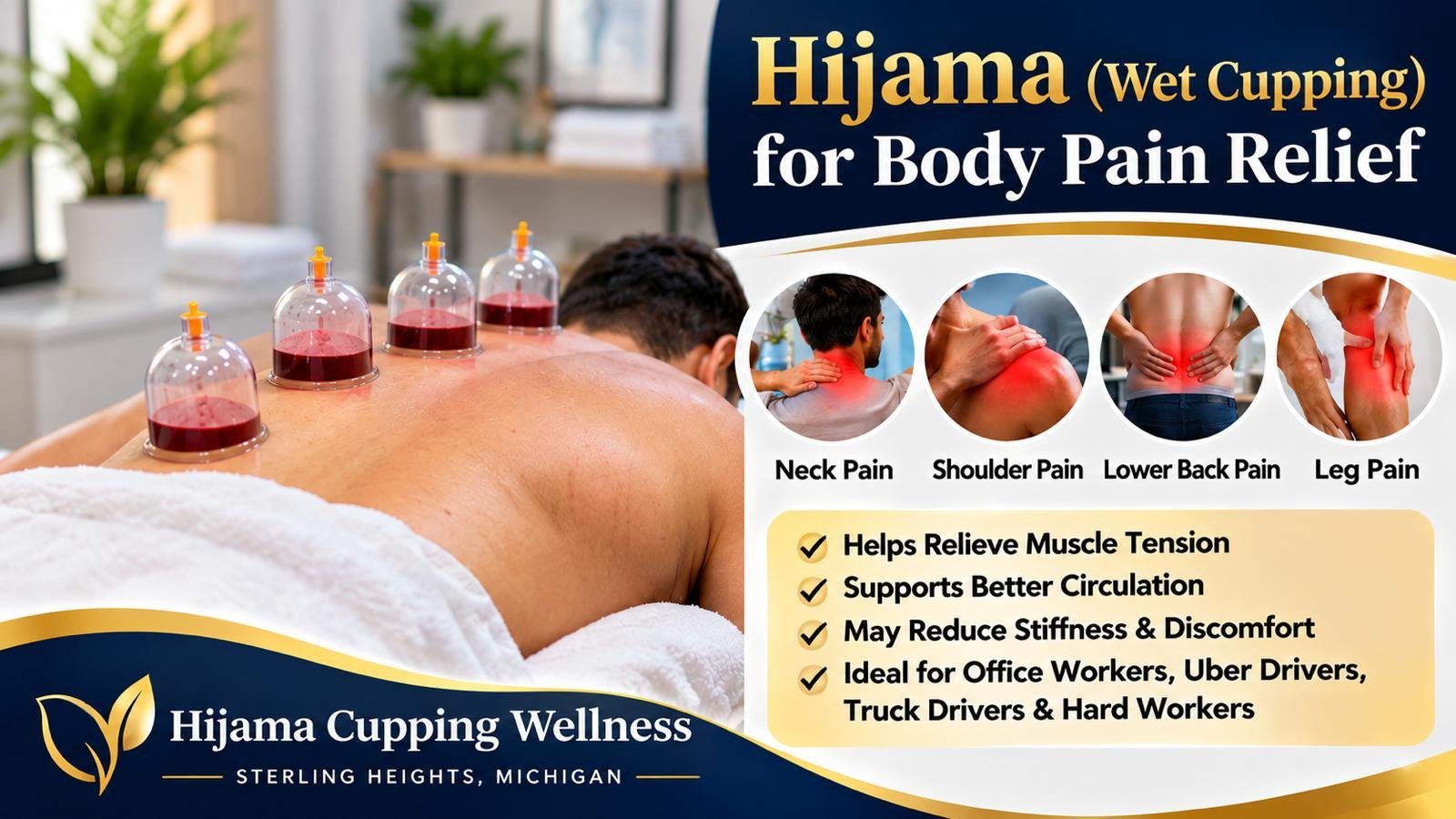
1. Hijama for Neck and Shoulder Discomfort
Neck and shoulder tension is common among people who work at computers or spend extended periods driving. Looking down at mobile phones, maintaining a fixed driving position and repetitive movements can contribute to muscular discomfort. Some individuals choose cupping as a complementary wellness practice for neck and upper-back muscle tension.
2. Hijama for Lower Back Pain
Lower-back discomfort is a common concern among office employees, professional drivers and physically demanding workers. Sitting for long periods, bending, lifting and maintaining the same position throughout the day can contribute to back discomfort. People experiencing muscular lower-back discomfort sometimes explore Hijama alongside stretching, exercise and other appropriate treatments.
3. Hijama for Leg Pain and Muscle Fatigue
Long-distance drivers, delivery professionals and workers who spend hours standing may experience leg stiffness and muscle fatigue. Maintaining regular movement breaks, stretching and appropriate physical activity can support muscular health. Some individuals also explore cupping therapy as a complementary approach to managing muscular discomfort.
Important: Sudden swelling, redness, warmth or pain in one leg requires prompt medical evaluation rather than cupping.
What Happens During Hijama Wet Cupping?
A typical wet cupping session includes:
Initial consultation and discussion of your wellness needs.
Selection of appropriate treatment areas.
Application of cups to create suction.
Small superficial skin incisions using sterile, single-use equipment.
Gentle removal of a small amount of blood.
Cleaning and dressing of the treated areas with aftercare instructions.
Professional hygiene, proper training and single-use sterile equipment are essential.
Who May Consider Hijama?
Hijama may be explored as a complementary wellness service by:
Office employees with sedentary lifestyles.
Uber, Lyft and truck drivers.
Construction and warehouse professionals.
People experiencing muscular tension.
Individuals interested in traditional cupping therapy.
Wet cupping is not suitable for everyone. People with anemia, bleeding disorders, active skin infections or those taking blood-thinning medication should consult a healthcare professional before treatment.
Why Choose Hijama Cupping Wellness in Sterling Heights, MI?
At Hijama Cupping Wellness, we focus on personalized cupping services in a professional and comfortable environment.
Targeted Pain Management Hijama – $100
Neck-to-Back Hijama – $130
Full Body Detoxification – $150
Location: Sterling Heights, Michigan
Whether you spend your day behind a computer, driving across Michigan or working physically demanding shifts, your body deserves attention and care. Explore professional Hijama wet cupping at Hijama Cupping Wellness, Sterling Heights, Michigan.
Medical disclaimer: Hijama is a complementary wellness practice. It is not a proven cure or a substitute for medical diagnosis, physical therapy or prescribed treatment. Individual results vary. Wet cupping carries risks including infection, bleeding, scarring and anemia.
Frequently Asked Questions
What is Hijama (Wet Cupping)?
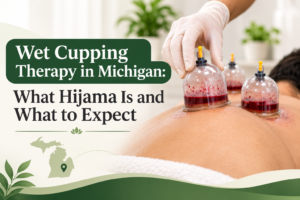
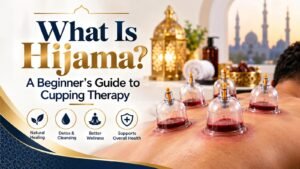
Hijama is a traditional cupping practice involving suction cups and small superficial skin incisions to remove a small amount of blood. It is practiced in different cultures and traditional wellness systems.
What is the difference between wet cupping and dry cupping?
Dry cupping uses suction cups without cutting the skin. Wet cupping involves superficial skin incisions followed by suction to collect a small amount of blood.
Can Hijama help with neck and shoulder pain?
Some people explore Hijama as a complementary approach for neck and shoulder muscle discomfort. Results vary, and it is not a replacement for medical treatment.
Can Hijama help with lower-back pain?
Cupping has been studied for lower-back discomfort, with some research suggesting potential pain relief. Evidence is still limited.
Is Hijama suitable for Uber and truck drivers?
Professional drivers who spend long hours sitting may experience muscular stiffness and discomfort. They may consider discussing Hijama with a qualified practitioner as part of a broader wellness routine.
Can office workers benefit from Hijama?
People who sit for extended periods may experience neck, shoulder and back tension. Hijama is one complementary wellness option they can discuss with a practitioner.
Does Hijama hurt?
Most people experience a pulling sensation from the cups. Wet cupping may cause mild stinging or discomfort during the superficial skin incisions. Sensitivity varies.
How much blood is removed during Hijama?
The amount varies depending on the individual, treatment area and procedure. Hijama should never involve excessive blood removal.
How long does a Hijama session take?
Session duration depends on the number of treatment areas and individual needs. Your practitioner will explain the expected appointment duration before starting.
How should I prepare for my Hijama appointment?
Drink water and stay normally hydrated, have a light meal, wear comfortable clothing, and inform your practitioner about medications and medical conditions. Avoid strenuous exercise immediately before your appointment.
What should I do after Hijama?
Follow your practitioner’s aftercare instructions. Keep treated areas clean and covered, avoid swimming and strenuous exercise until the skin has healed, and monitor for signs of infection.
Are circular marks normal after Hijama?
Temporary circular marks and skin discoloration can occur after cupping. They usually fade over time, although duration varies.
How often should I get Hijama?
There is no scientifically established ideal frequency. Treatment intervals should depend on your health, recovery, medical history and practitioner’s assessment.
Are Sunnah Hijama dates necessary?
Some Muslims prefer the 17th, 19th and 21st days of the Islamic lunar month based on traditional religious narrations. These dates are not a medical requirement for receiving Hijama.
Is Hijama safe?
Wet cupping involves breaking the skin and carries risks such as infection, bleeding, scarring and anemia. Proper hygiene, sterile single-use equipment and appropriate screening are essential.
Who should avoid wet cupping?
People with severe anemia, bleeding disorders, active skin infections or significant medical conditions should seek medical advice first. People taking blood-thinning medication must discuss it with their healthcare professional. Never stop prescribed medication for Hijama.
Can I get Hijama if I have diabetes?
People with diabetes should consult their healthcare professional before wet cupping, especially if they have poor wound healing, reduced sensation or circulation problems.
Do you use disposable equipment?
Patient safety and hygiene are priorities. Sterile single-use equipment should be used for every wet cupping procedure, with appropriate protective equipment and cleaning procedures. Confirm that your clinic’s actual procedures meet these standards.
Do I need a doctor’s appointment before Hijama?
Not everyone needs a medical appointment, but people with medical conditions, unexplained pain, bleeding risks or medication concerns should consult their healthcare professional first.
Where is Hijama Cupping Wellness located?
Hijama Cupping Wellness provides cupping services in Sterling Heights, Michigan.